
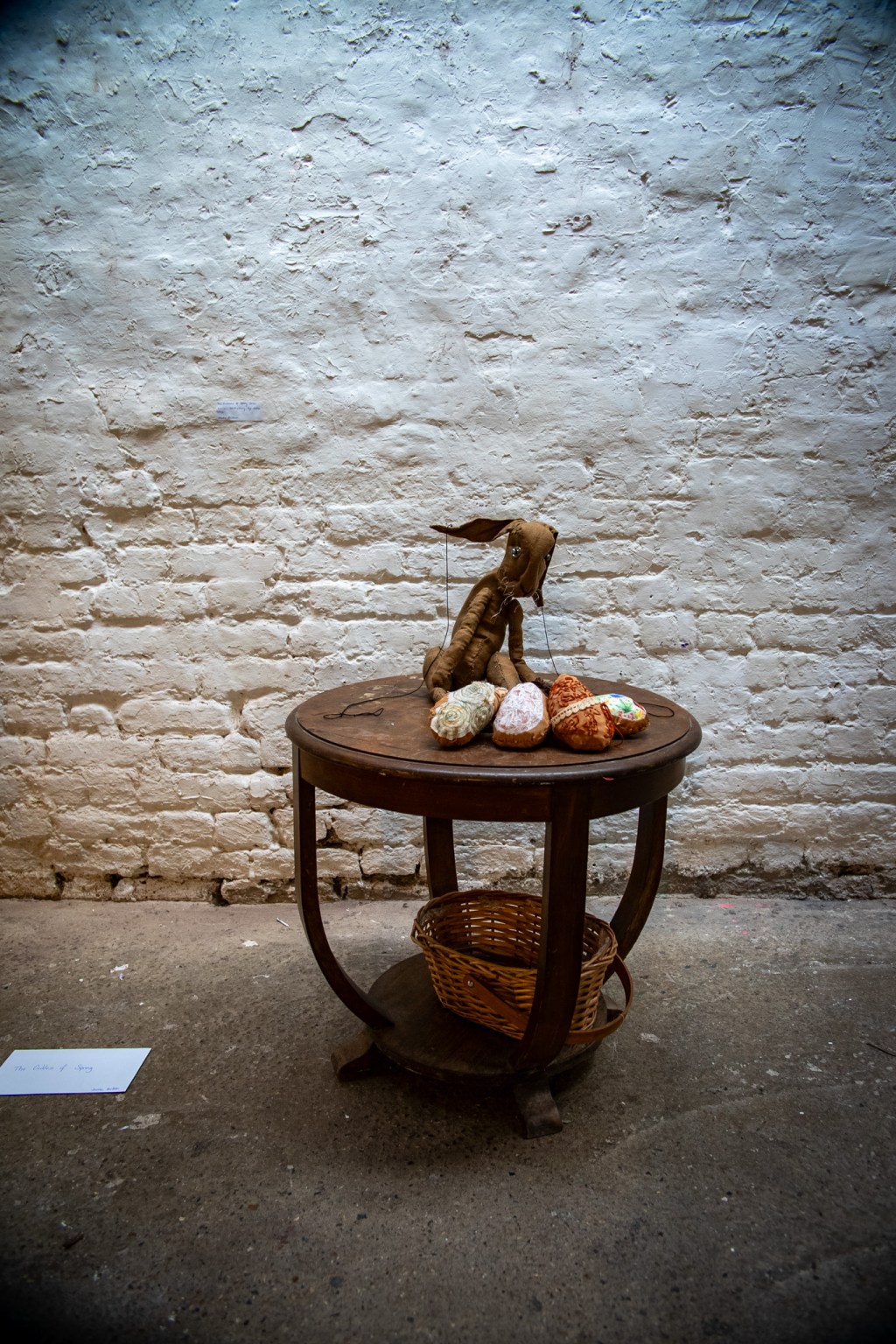
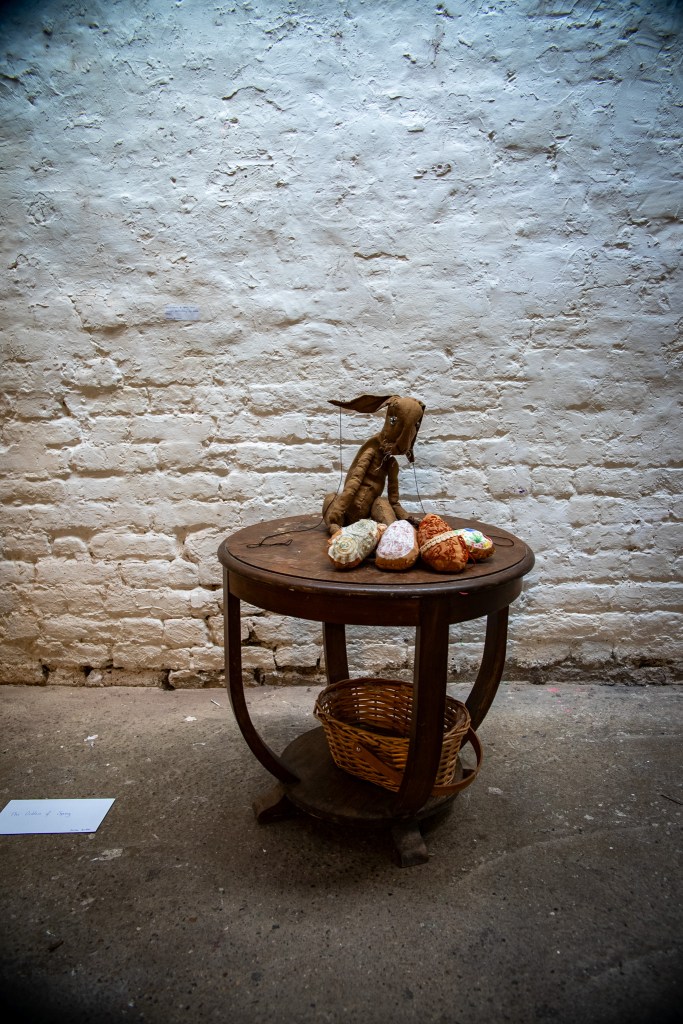
I have constructed textile based puppets and dolls inspired by the goddesses Ishtar and Esotre, alongside various Easter symbols (the hare, egg). I have also complied narrative illustrations/ sketches/ text from my research. My piece aims to address the fallacy in the Easter tradition, and to celebrate the return to life and the renewal of nature inspired from pre-Christian folklore.
Ishtar, the Mesopotamian goddess of love, war, and fertility, has origins in Nineveh. Nineveh was an ancient Assyrian city in Mesopotamia. It is located in the modern city of Mosul, Iraq, where my grandfather was born. This piece touches upon my heritage, being half Iraqi on my mother’s side.
I was drawn to the ideas of Fables and Fallacies, and was particularly interested in the folklore regarding Easter and Spring. Since the ancient times, almost every culture has had some type of ritual to celebrate the return to life and the renewal of nature. I read about Ēostre, a Pagan Germanic goddess, and the Babylonian and Assyrian goddess Ishtar. Researching these goddesses made me realise the importance of addressing the fallacy in the Easter tradition, in particular, Christian syncretism of pagan and ancient goddesses.
Among the symbolic elements of pre-Christian worship, Christian doctrine took possession of symbols like the egg, the hare or the rabbit; in Celtic tradition, the hare was a totem animal of the lunar goddesses because it died every morning and resurrected every evening, like the moon. It stands for the cyclic movement of life (Billson, 1892, p. 449). The egg is also seen as the symbol of fertility and rebirth, between light and darkness, like the equinox.
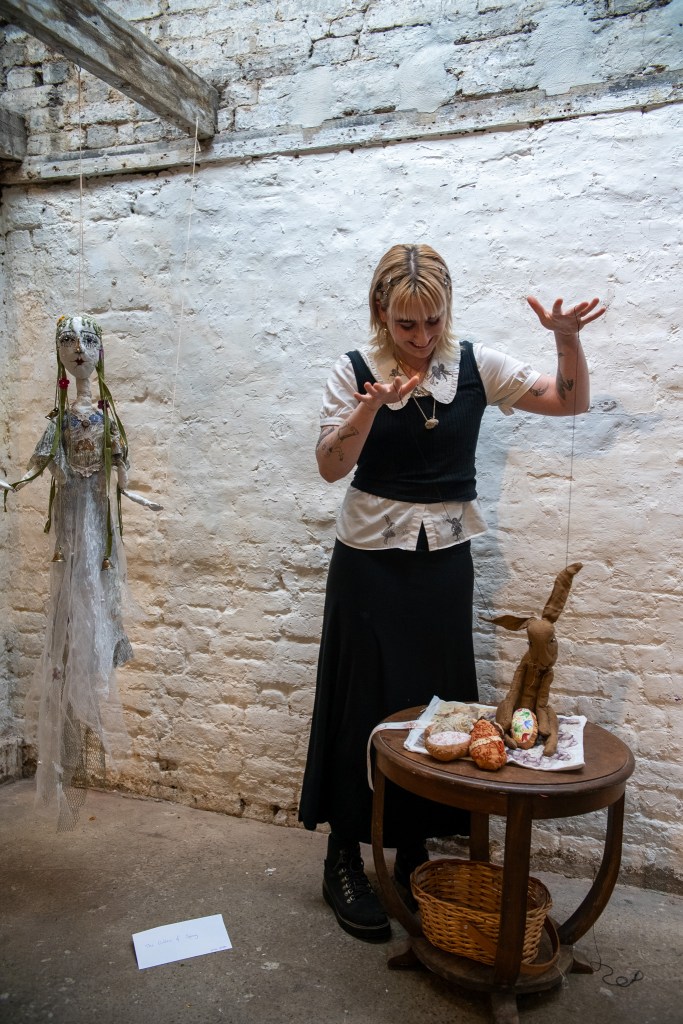
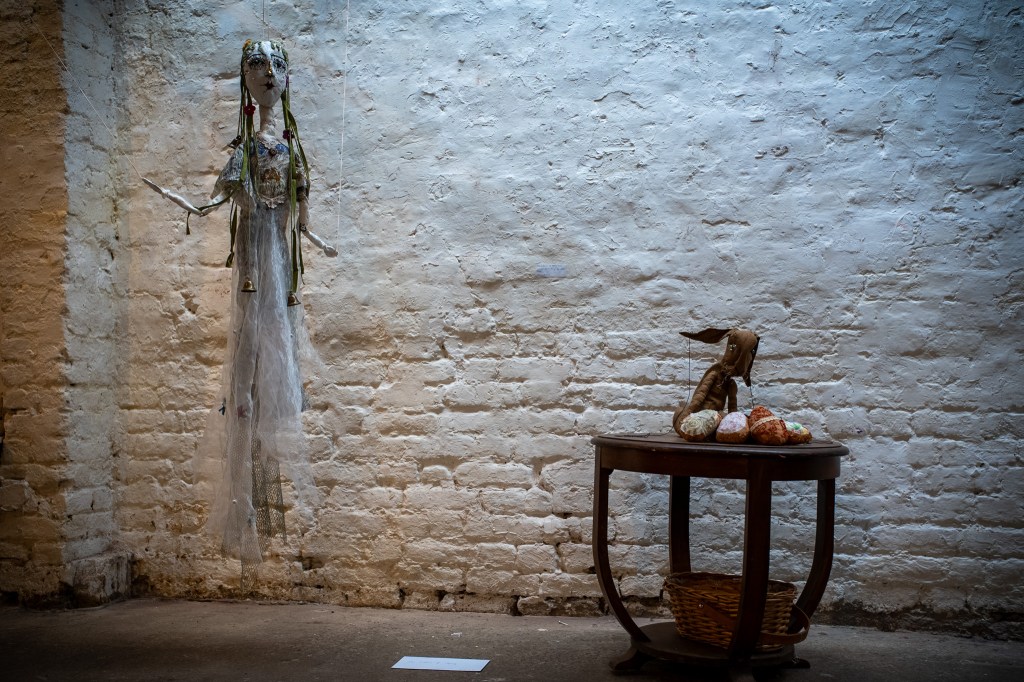
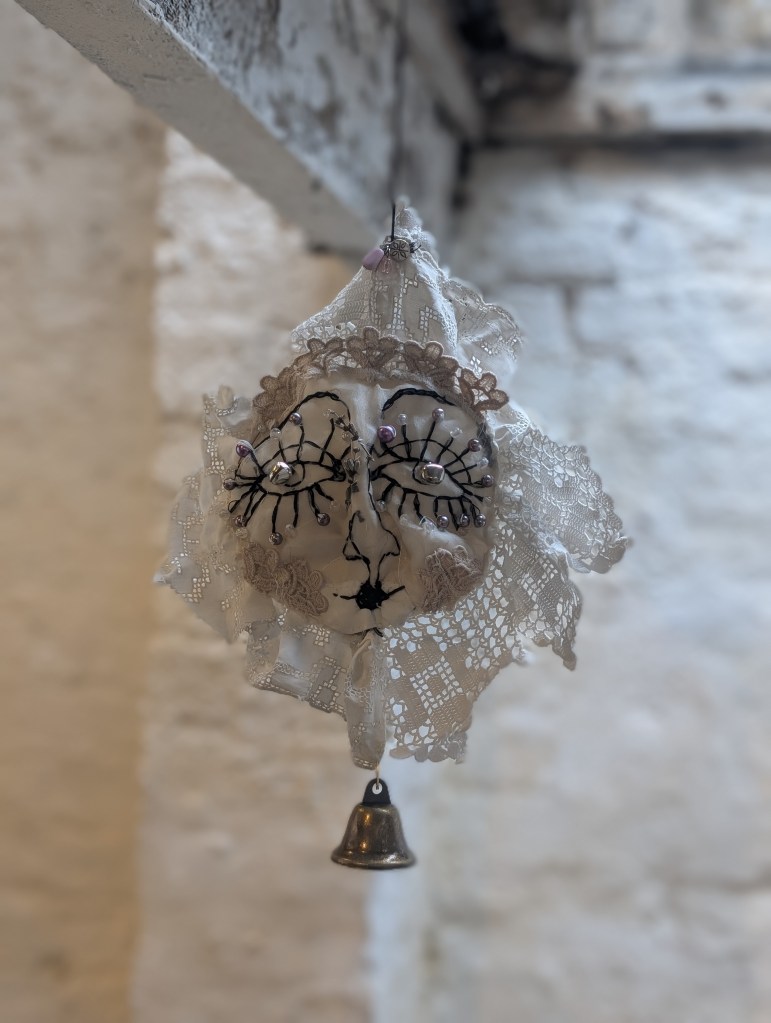
𝚃𝚑𝚒𝚜 𝚙𝚒𝚎𝚌𝚎 𝚠𝚊𝚜 𝚖𝚊𝚍𝚎 𝚒𝚗 𝚛𝚎𝚜𝚙𝚘𝚗𝚜𝚎 𝚝𝚘 𝚊𝚗 𝚘𝚙𝚎𝚗 𝚌𝚊𝚕𝚕 𝚋𝚢 𝚝𝚑𝚎 𝚝𝚑𝚒𝚖𝚋𝚕𝚎 𝚌𝚘𝚕𝚕𝚎𝚌𝚝𝚒𝚟𝚎, 𝚊 𝚕𝚘𝚟𝚎𝚕𝚢 𝚐𝚛𝚘𝚞𝚙 𝚘𝚏 𝚊𝚛𝚝𝚒𝚜𝚝𝚜 𝚏𝚛𝚘𝚖 𝚟𝚊𝚛𝚒𝚘𝚞𝚜 𝚍𝚒𝚜𝚌𝚒𝚙𝚕𝚒𝚗𝚎𝚜, 𝚊𝚗𝚍 𝚎𝚡𝚑𝚒𝚋𝚒𝚝𝚎𝚍 𝚊𝚝 𝚑𝙰𝚁𝚃𝚜𝚕𝚊𝚗𝚎 𝚐𝚊𝚕𝚕𝚎𝚛𝚢 𝚒𝚗 𝙽𝚎𝚠 𝙲𝚛𝚘𝚜𝚜.


